
Additional symptoms
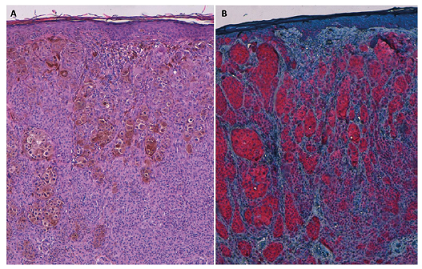
About CMN
Picture: Pellegrini et al. Acta Derm Venereol 2020; 100: adv00040
When melanocytosis does cause symptoms directly, they can come in different forms.
One should be vigilant for symptoms of developmental stagnation, among others. Alarming symptoms that require urgent referral include focal neurological abnormalities, epilepsy, increased intracranial pressure, or spinal cord compression.
In general terms, the occurrence of neurological symptoms in every patient with CMN, especially in a young child, should be a cause for great attentiveness and appropriate referral. The main alarming symptoms include neurological manifestations of:
In addition to the above-mentioned alarming symptoms, milder neurological symptoms, such as developmental disorders, also deserve attention in children with CMN as they may indicate NCM. During the regular medical history (by a dermatologist), it is particularly important to inquire about subtle abnormalities, such as: overall development on schedule, performing well in school, and any unexplained deviations.
People with CMN can have differences in the brain or spinal cord called neurocutaneous melanocytosis (NCM). This means that excess
pigment cells (melanin) are present in the brain or spinal cord. The term neurocutaneous melanosis is not always used anymore because it is not specific enough. Differences can be detected on an MRI scan.
Many experts currently advise that any child born with two or more congenital melanocytic nevi (CMN) of any size or location should undergo a routine MRI scan of the brain and spine within their first year of life, ideally before reaching 6 months of age. While it cannot be ruled out that MRI abnormalities may occur in children with only one CMN at birth, the risk is significantly lower.
Should a child reach the age of two and remain in good health without having undergone a scan, it is unnecessary to retrospectively conduct the scan. Even if there were any anomalies, they would unlikely require intervention.
MRI scan results fall into three main categories:
The MRI results serve as the most reliable predictor of potential clinical issues:
In summary, the MRI results play a significant role in guiding the clinical management of children with CMN, ensuring appropriate interventions and monitoring are implemented based on the specific category of MRI findings.
Dr. Barkovich specialized in high-resolution, state-of-the-art imaging to diagnose and treat neurological disorders in infants and children. He wrote the following paper on conducting an MRI for the neurological involvement of CMN.